
Strong company cultures require more than technical expertise
Drawing on her experience of shaping workplace cultures across different organisations, Vibeke Morthaug – our Head of HR – identifies diversity as a critical factor: "Competence, efficiency, and delivery tend to dominate the conversation. But the strongest work environments, where people tend to stay and want to grow alongside the company, demand more than that." How can companies strengthen their culture, and what impact does it have on performance?
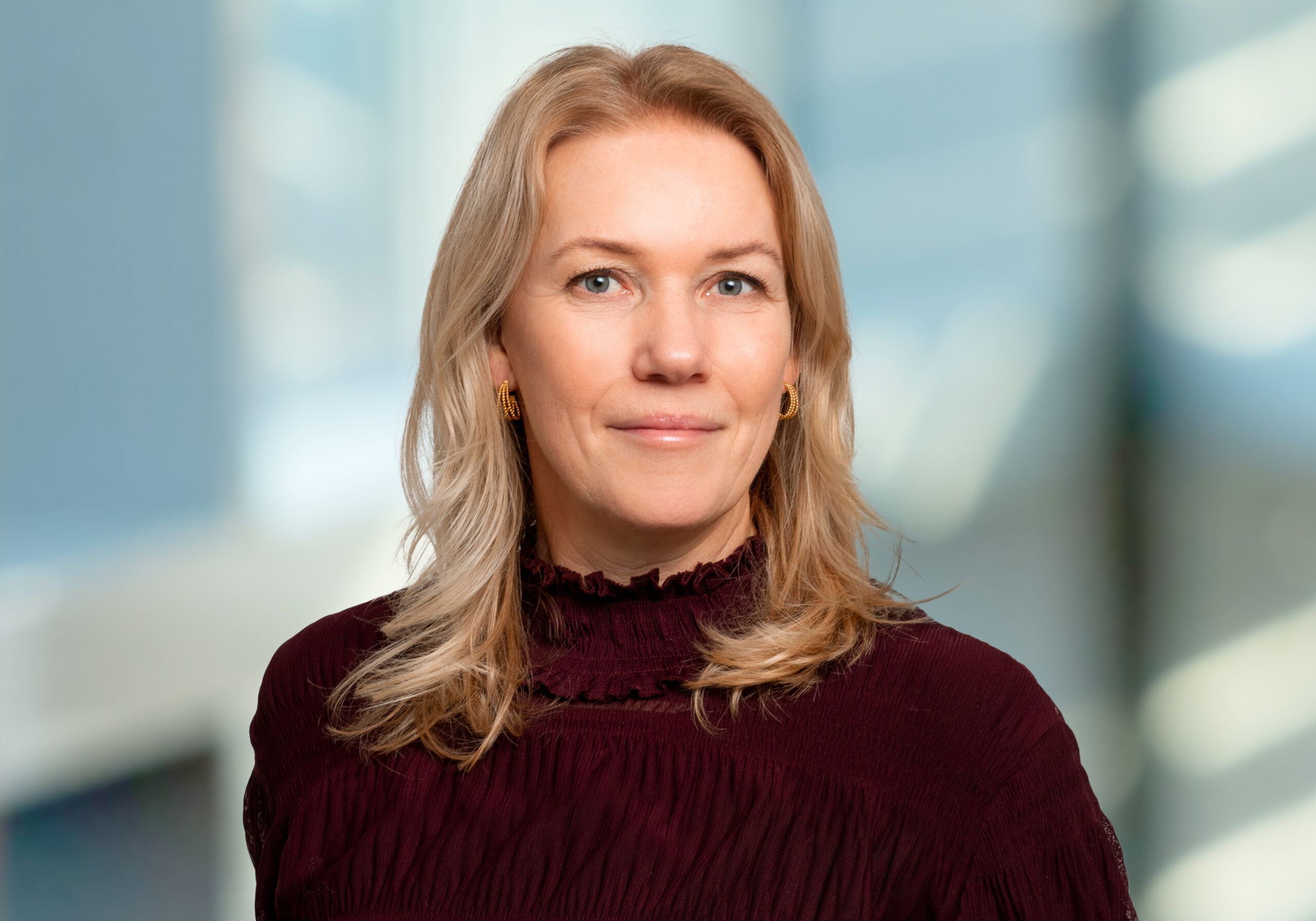
More and more research points to the same conclusion: to succeed in the face of current and future challenges, organisations cannot rely on workforces where everyone thinks alike, works alike, and follows the same paths. Diversity does not just contribute to greater wellbeing and stronger collaboration – it is simply a business advantage.
The evidence is difficult to ignore: organisations with more diverse leadership teams consistently outperform those with more homogeneous leadership structures. Yet many industries continue to lag behind, and the tech sector is no exception. With that in mind, we sat down with Vibeke Morthaug, Head of HR at Tribia, to discuss why progress remains slow and what organisations can do to build a more inclusive workplace culture.
Diversity and inclusion in tech: Where do we stand today?
In 2015, McKinsey & Company published Why Diversity Matters – a groundbreaking contribution to the conversation surrounding diversity in the workplace. Among its findings was a clear link between diversity in leadership and financial performance: for every 10-percentage-point increase in gender diversity among leadership teams, companies saw an average 3–5% increase in earnings before interest and tax (EBIT). And now, more than a decade later, McKinsey continues to track diversity in the workplace – and one thing is clear: raising awareness is not enough. Turning good intentions into lasting change has proven challenging across many industries.
“When there’s a good balance at the leadership level, you’ve already done a lot of the heavy lifting. But no single leader or department can carry the company culture on their own. It’s a shared responsibility across the entire organisation.”
– Vibeke Morthaug, Head of HR
For Vibeke, building a workplace where people feel seen, heard, and valued is fundamental. She believes employees should not only be encouraged to contribute, but also feel responsible for shaping the culture: “It’s strictly a good thing when employees feel a genuine sense of responsibility to influence the company’s direction.”
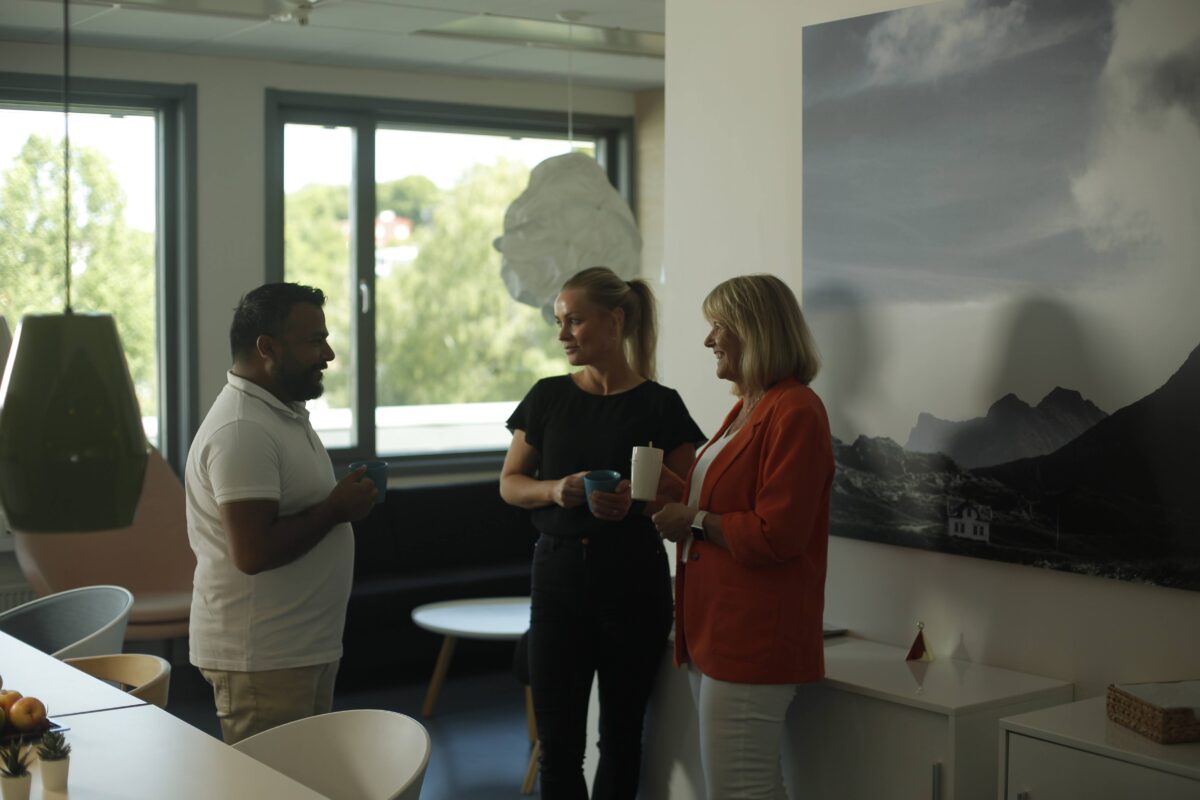
Vibeke joined Tribia with more than 20 years of experience in HR and organisational development. Today, she works closely with culture, leadership, and recruitment – and values any opportunity to listen and be open to new perspectives. “If everyone keeps thinking the same way or doing what they’ve always done, stagnation is inevitable,” she emphasises.
“I am passionate about building a work environment where everyone genuinely enjoys what they do and want to stay with the company for a long time. In order to do that, we need to challenge both our own and others’ established ways of thinking – particularly in industries with long-standing traditions.”
– Vibeke Morthaug, Head of HR
Professional communities with long-standing traditions, such as the construction industry, provide significant value. But they do not shield us from the changes happening around us. For technology companies, however, change is constant.
“We continuously evaluate the skills, experience, and perspectives within Tribia to identify how we can improve and work smarter. For me, that’s particularly important when it comes to recruitment. New talent with fresh perspectives is a huge source of inspiration for others,” says Vibeke. “Our current ways of working are not a finished product. They’re constantly evolving.”
Taking action: Three steps towards greater diversity, inclusion, and equity
Earlier this year, McKinsey’s annual report Women in Tech & AI in Europe: Can the region close its gender gap? was published. Based on data from more than 500 companies, 37 countries, and four million workers, the report puts gender representation across Europe’s technology sector under the microscope.
The Women in Tech report’s key findings include:
- Women account for merely 19% of all employees in core tech roles across Europe — down from 22% in 2022.
- Women hold only 13% of all management positions in tech, and 8% of senior management or director-level roles.
- In software development, female representation drops by 15 percentage points between entry-level and senior leadership.
- 49% of women reported experiencing bias or harassment at work in the past year.
- 82% of women reported feeling like they have more to prove at work than their male peers.
The Nordic region presents a particularly striking paradox: Finland and Sweden consistently rank among Europe’s most gender-equal countries, yet women make up only 36% and 23% of technology roles respectively. In other words, gender equality at a societal level does not automatically translate into inclusive workplace cultures. For many, the barriers to entering, remaining in, and progressing within the tech sector remain high.
McKinsey highlights three key focus areas for organisations that want to create meaningful change:
1. Take ownership of culture – from the top down
Company culture is one of the most important factors in attracting and retaining talent. And creating lasting change requires more than good intentions; leaders need to set an example and take ownership through clear goals, consistent follow-up, and transparent reporting. Mentoring and sponsorship programmes are a practical place to start, as women with the support of more senior role are 200% more likely to see their ideas gain traction within the organisation.
2. Invest in developing skills for the future
AI is changing the way we work across pretty much every industry – and the change is happening fast. The roles that are most affected by this shift are disproportionately held by women. However, organisations that invest in reskilling and upskilling are not only preparing their workforce for the future – they are also providing more people with a fair opportunity to grow alongside the changes happening all over.
3. Make flexibility an integral part of the workplace
Flexibility and hybrid working are now a key part of modern worklife – and can be particularly important for women. Providing adequate support through different stages of life help with retaining and developing talent over time. Because when flexibility is paired with trust, transparency, and predictability, organisations strengthen wellbeing, diversity, and career development all at once. Equal opportunities for those who benefit from flexible ways of working should never be limited.
“Diversity in the workplace isn’t about ticking certain boxes during recruitment. It’s about embracing different personalities, perspectives, experiences, and values – for our own benefit, as well as our customers’. We must never stop challenging ourselves, seeking new perspectives, or trying new things. That is how we grow and learn, after all.”
– Vibeke Morthaug, Head of HR
When Vibeke joined Tribia, it was the combination of technology, construction, and new challenges that first caught her attention. Today, she is just as passionate about the people and culture behind the company as she is about the value it creates for customers – and how the two influence one another. “We need a diverse workforce if we want to stay adaptable. Different perspectives make us better equipped to navigate change and uncertainty. And that has never been more important than it is right now.”
Want to know more about the people and culture behind Tribia?
Related news
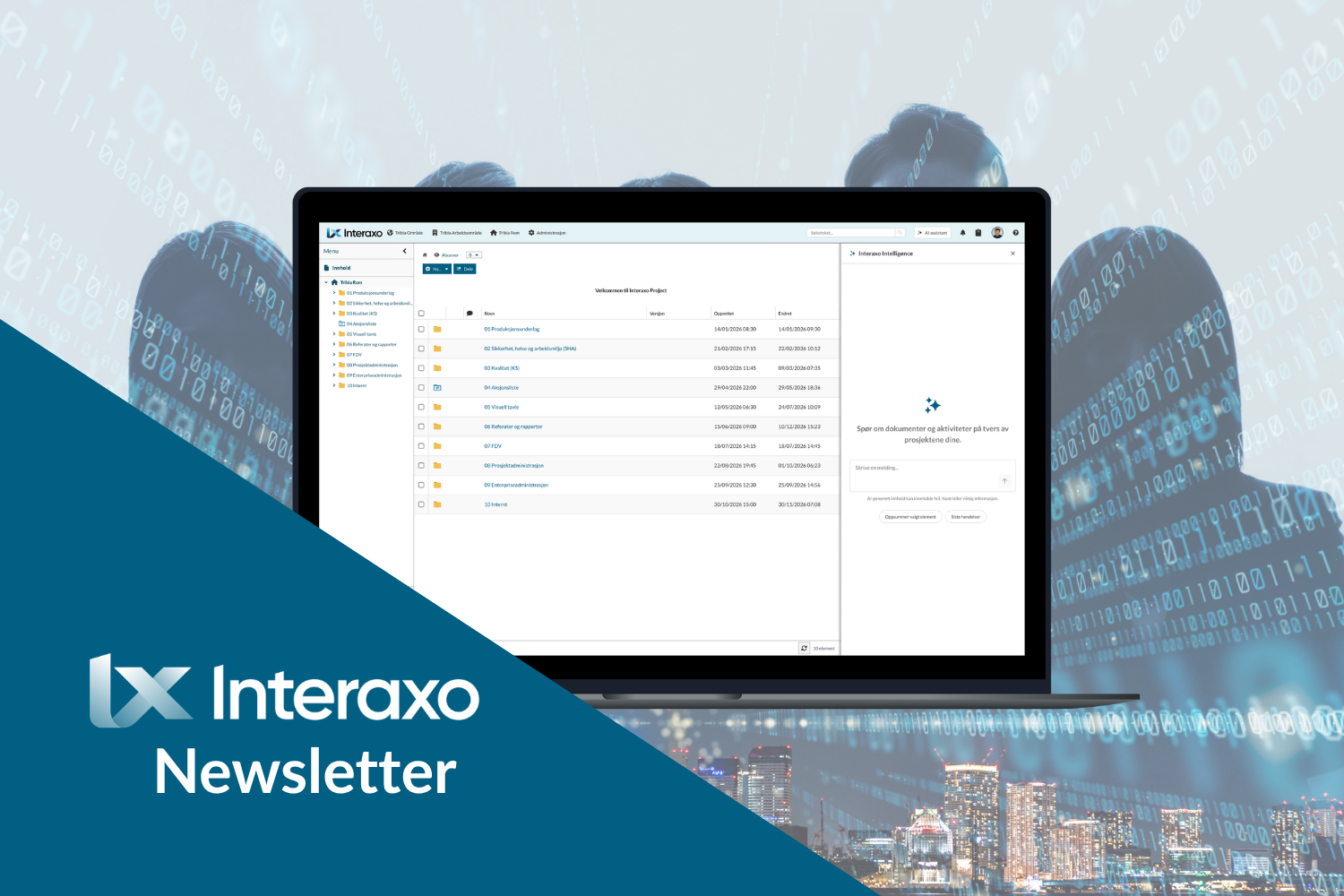
Newsletter, August 2026
Explore the latest Interaxo newsletter – including product news, feature updates and industry insights for those working in construction and infrastructure projects. This month, you'll get a closer look at our new AI assistant Interaxo Intelligence, integrated directly into the project, and at our annual event Prosjektlykke 2026, with AI centre stage.
Newsletter, may 2026
Explore the latest Interaxo newsletter – including product news, feature updates and industry insights for those working in construction and infrastructure projects. This month, we're sharing a sneak peek on our upcoming AI assistant, along with a new map feature and meeting report functionality in Interaxo. You'll also find a summer greeting from our CEO, Steinar Svinø.

New map solution for infrastructure projects
In any infrastructure project, precise location is everything. Yet uncertainty about where something occurs is often the starting point of an error that leads to delays or even legal disputes. But with the new map in Interaxo, everyone involved gets a shared overview of what is happening where – directly linked to registrations, processes and documentation.
Book a demo
Implement Interaxo and get the power to execute
Implement Interaxo and get the power to execute
Curious about how you can improve project delivery with Interaxo? We’d be happy to show you how the platform streamlines collaboration, keeps project data secure and accessible, and frees up more time to focus on real value creation.
Fill in the form or give us a call on +47 22 50 45 50, and we’ll set up a non-binding product demo to walk you through Interaxo, explore all features, and answer any questions you may have.
